
-1.svg "brillopak-automated-packing-machine-specialists- (2)-1")

Introduction
Albert Bartlett: pioneers in the fresh produce industry. The first to pre-pack carrots in plastic bags in Britain. The first in the UK to have a branded fresh potato. The first vegetable brand to be advertised on TV. Driven by Founder Albert’s spirit of innovation and passion for quality, the company is constantly striving to reach the next level. Looking to improve efficiency and productivity in their fresh potato operations, Albert Bartlett turned to automation, more specifically, Brillopak’s PAKstation. This semi-automated solution has a reported 15% average increase in throughput per shift and the potential to reduce labour by at least one person per line, quickly delivering a positive ROI.
The Story of Albert Bartlett
Whilst now the lead supplier of potatoes in the UK, the company started by selling beetroots in 1948. After beetroots came carrots, and then potatoes. More recently in 2018, chilled operations in the form of prepared foods were added to the line-up. True to their Scottish roots, HQ can be found in Airdrie and hosts fresh and chilled operations. Other sites include Westwick in Norwich which hosts the frozen operations while the St Helier site handles Jersey Royal potatoes seasonally.
Needing to improve efficiency and reduce costs, the company knew that implementing end-of-line automation could achieve this. However, known challenges such as multiple product changeovers and packing into BDUs did not make this straightforward and, with this being the first venture into automation in this area, Albert Barlett were looking for a low-risk investment. Asked why Brillopak was chosen to partner with, Head of Operations Russell White put it simply “only Brillopak understood our concerns and offered us a quick win, simple solution. It just made sense”.
The Challenge
At the time, Albert Bartlett were particularly looking for an entry-point automated solution that was cost-effective, simple and provided quick results.
With over 20 SKUs requiring multiple product changeovers in a shift, a fully automated system, whilst certainly achievable, would not meet the specified requirements of ‘simple’ or ‘cost-effective’ due to the complexity involved.
An issue specific to potato packing is the large, often metre-high, containers (known as BDUs) that potatoes are packed into. Whilst it is possible to use a fully automated solution to pack potatoes into these containers, again, this wouldn’t be ‘simple’ or ‘inexpensive’. Any fully automated system would always be considered the ‘riskier’ investment when compared to a semi-automated one. Brillopak’s approach to the project presented by Albert Bartlett: keep it simple, keep it semi-automated.
The Solution
Enter the PAKstation, a semi-automated end-of-line solution designed and manufactured by Brillopak. Ideal for packing lines handling multiple SKUs in a shift requiring several product changeovers, this machine puts management back in control of line speed. With an ergonomic design, one operator can manually pack products from the conveyor belt into containers while another loads empty crates and removes loaded ones once packed.
After evaluating various solutions on the market, Albert Bartlett chose to partner with Brillopak and opted to start with the PAKstation as this solution met their requirements.
Simple? “There wasn’t much that could go wrong”
Inexpensive? “By far the most cost effective solution presented to us”
Brillopak are strong advocates of the phased implementation approach to automation, and Albert Bartlett have benefitted from this. A plan was made:
- Phase 1 would begin with semi-automation and install 1 PAKstation.
- If this was positive, then Phase 2 would be to install a further 13 PAKstations across various sites. In doing so, Albert Bartlett could also take advantage of the discounted prices available for purchasing several of the same machine in the same order.
- Further phases would include upgrading to full packing automation and redistributing the existing PAKstations to repurpose in other areas of the business.
The Results
Albert Bartlett implemented Phase 1 successfully and were pleased with the results, meaning that they progressed on to Phase 2 which speaks for itself. This totals 14 PAKstations installed in 3 packhouses packing fresh potatoes. Speaking to Russell more than a year after installation, he’s able to speak tangibly about what has been achieved.
Quick results? “The machines paid for themselves after a year. We’ve gone down from 3 operators to 2 on each line”
The Bottom Line
Deciding not to take the ‘full steam ahead’ route has paid dividends for Albert Bartlett, laying stable foundations and setting them on a lower-risk, higher-gain path to fully automated operations.

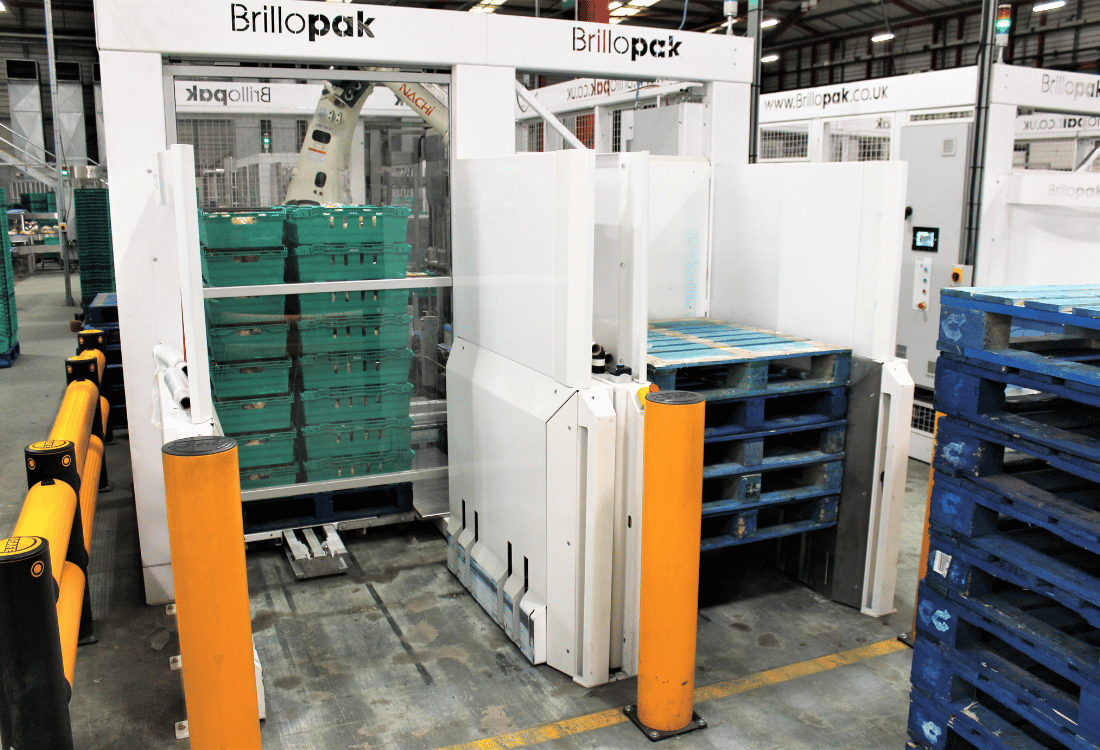
Robotic Palletiser Pushes Morrisons Safety Envelope
7 compact palletisers transform efficiency at McVities main co-packing centre

No Comments Yet
Let us know what you think